B2B Digital Marketing Services: A Practical Guide to Generating Quality Business Leads
B2B Marketing Guide B2B Digital Marketing Services: A Practical Guide to Generating Quality Business Leads B2B companies often face a different marketing challenge than businesses selling directly to consumers. Their customers may…
 Ayan Ali
B2B Digital Marketing Services: A Practical Guide to Generating Quality Business Leads
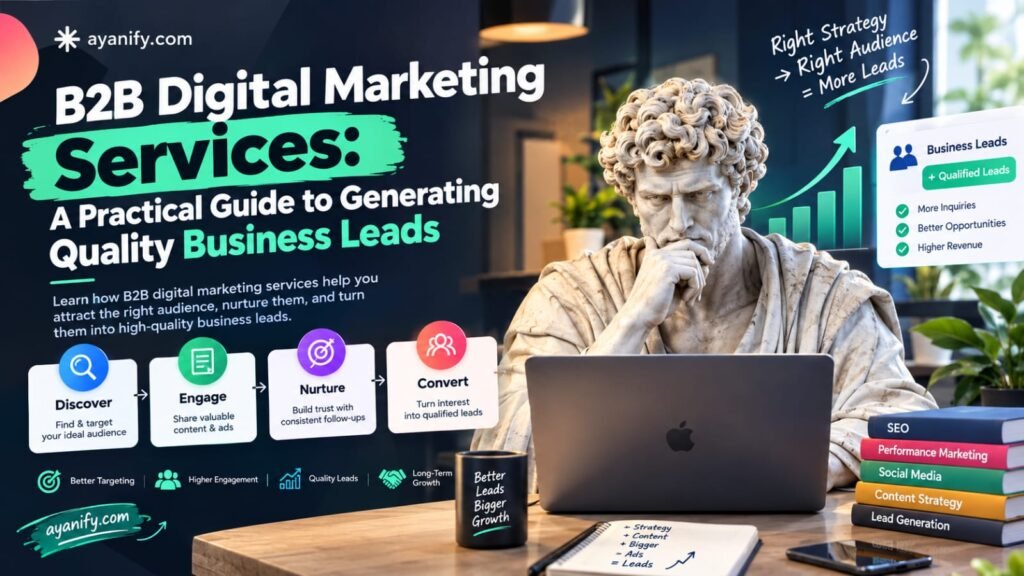
B2B companies often face a different marketing challenge than businesses selling directly to consumers. Their customers may compare several suppliers, request quotations, consult multiple decision-makers, and take weeks or months before making a purchase. Simply getting website visitors or social media likes is not enough. Businesses need a strategy that attracts the right prospects and helps turn their interest into sales opportunities.
B2B digital marketing services help businesses reach other businesses through search engines, paid advertising, professional social networks, content marketing, email campaigns, and conversion-focused websites. The goal is to improve brand visibility, attract relevant decision-makers, generate qualified leads, and support long-term business growth.
For Indian manufacturers, IT companies, SaaS startups, consultants, wholesalers, and professional service providers, digital marketing can create new opportunities to reach buyers across cities and markets.
In this guide, we explain the main B2B marketing services, how they work, which strategies businesses should prioritise, and how to evaluate a digital marketing partner. You will also learn how to measure results beyond clicks and impressions.
What Are B2B Digital Marketing Services?
B2B digital marketing services are online marketing solutions that help one business promote its products or services to another business. These services use digital channels to reach potential buyers, communicate value, generate sales enquiries, and build relationships with decision-makers.
For example, an industrial equipment manufacturer can use SEO to appear in searches for its products, Google Ads to reach buyers actively comparing suppliers, and a professional website to encourage quotation requests.
Unlike many consumer purchases, B2B transactions can involve several stakeholders, technical requirements, budgets, and longer approval processes. Marketing should therefore focus on trust, relevant information, lead quality, and the needs of the buying team.
B2B Marketing Versus B2C Marketing
| Factor | B2B Marketing | B2C Marketing |
|---|---|---|
| Target audience | Businesses and professional buyers | Individual consumers |
| Purchase decision | Often involves multiple people | Often involves an individual or household |
| Sales cycle | Can be longer and more complex | Can be shorter, depending on the product |
| Content focus | Expertise, business value, specifications, ROI | Product benefits, lifestyle, convenience |
| Common conversion | Demo, consultation, quotation, sales meeting | Purchase, booking, subscription |
| Relationship | Often long-term | Varies by product and customer |
Both approaches can use SEO, advertising, social media, and email marketing. The difference lies in how these channels are used to support the buying journey.
Why B2B Businesses Need Digital Marketing
Business buyers commonly research products, suppliers, and service providers online before contacting a sales team. A business with limited online visibility may miss opportunities even if its products or services are competitive.
1. Reach Relevant Decision-Makers
Businesses can use search intent, professional targeting, industry-specific content, and carefully selected advertising audiences to reach people involved in purchasing decisions.
For example, an IT services provider may target companies looking for cloud migration, cybersecurity consulting, or software development rather than promoting generic IT services to everyone.
2. Generate Qualified Business Leads
A lead is not automatically a potential customer. Someone downloading a general guide may have different purchasing intentions from a procurement manager requesting a quotation.
Marketing and sales teams should agree on what makes a lead qualified, such as business type, requirements, budget range, location, and purchase timeline.
3. Build Credibility Before the First Meeting
Potential clients want evidence that a supplier understands their needs. Detailed service pages, product specifications, useful articles, genuine testimonials, and verifiable case studies can help establish credibility.
Never publish fabricated client results or testimonials. Trust depends on information that prospects can reasonably verify.
4. Create a Repeatable Source of Enquiries
SEO can attract relevant visitors over time, while paid campaigns can help businesses reach people searching for specific solutions. Email marketing and remarketing can support prospects who need additional information before contacting sales.
Results depend on competition, budget, offer quality, website experience, and execution. No channel guarantees a particular number of leads.
Types of B2B Digital Marketing Services
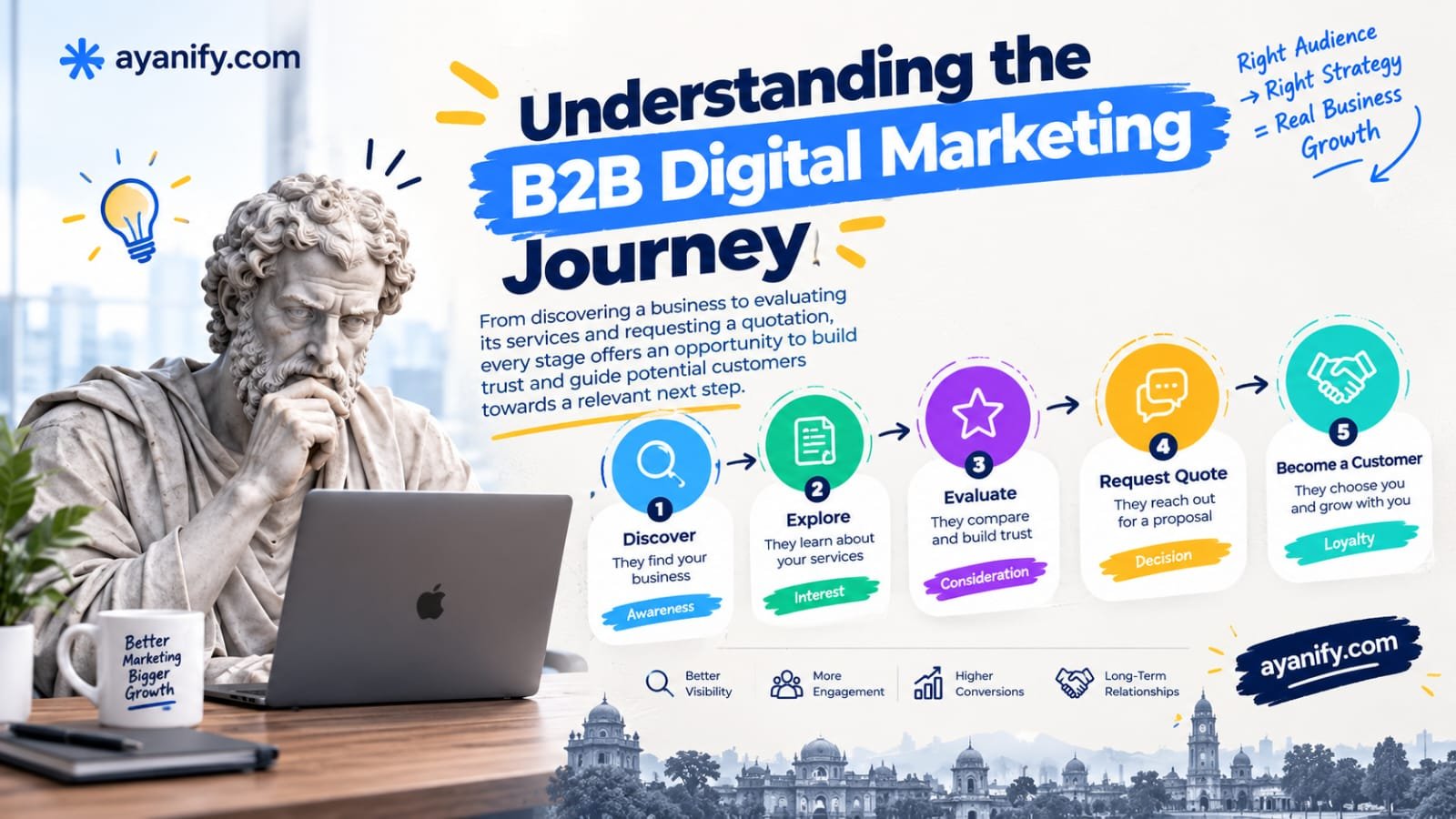
Different services support different stages of the B2B buying journey. The right combination depends on your audience, average deal value, sales cycle, and available resources.
1. B2B Search Engine Optimization (SEO)
B2B SEO improves a website’s visibility in organic search results for relevant business-related queries.
- Keyword research based on buyer intent.
- Optimisation of service and product pages.
- Technical SEO and website performance improvements.
- Helpful articles addressing customer problems.
- Relevant internal linking and authoritative backlinks.
- Measurement through Google Search Console and analytics tools.
For example, a packaging manufacturer may create useful pages around industrial packaging solutions, custom packaging specifications, and bulk packaging requirements.
The objective is not simply to attract more visitors. It is to attract people whose needs match the company’s offerings.
SEO usually requires consistent work and may take time to produce meaningful results. Competition and the quality of the website influence how quickly performance improves.
Businesses planning their overall online strategy can also read the digital marketing agency guide to understand how different services fit together.
2. Google Ads and B2B Performance Marketing
Paid search advertising helps businesses appear for relevant searches when prospective buyers are actively looking for solutions.
A B2B campaign might target terms such as industrial automation services, enterprise software development, or commercial equipment suppliers, depending on the company’s actual offering.
Effective campaigns generally require:
- Intent-focused keyword selection.
- Clear ad copy and relevant landing pages.
- Negative keywords to reduce irrelevant traffic.
- Conversion tracking for enquiries and calls.
- Regular review of lead quality and campaign costs.
Performance marketing can also include other paid channels when they suit the target audience. For a practical starting point, explore how to run Google Ads.
Avoid judging a campaign only by clicks or inexpensive enquiries. A lower volume of qualified leads may be more commercially valuable than a large volume of irrelevant submissions.
3. LinkedIn Marketing and Social Media Management
LinkedIn can be useful for reaching professional audiences, sharing industry knowledge, and building relationships with potential business customers.
A B2B social media strategy may include:
- Company-page optimisation.
- Educational posts and industry insights.
- Employee expertise and thought leadership.
- LinkedIn advertising where appropriate.
- Lead-generation campaigns and event promotion.
- Consistent responses to relevant enquiries.
Other platforms may be useful depending on the industry. For example, visual product demonstrations can support equipment suppliers, while YouTube videos can explain technical products or software workflows.
Choose channels based on where your buyers research solutions rather than assuming every platform is necessary.
4. B2B Content Marketing
Content marketing helps potential customers understand their problems and evaluate possible solutions.
Useful B2B content formats include:
- Detailed service pages.
- Industry-specific blog articles.
- Product comparison guides.
- Technical explainers and FAQs.
- Downloadable checklists.
- Webinars and product demonstrations.
- Original research and genuine case studies.
A software company could publish an implementation guide that explains integration requirements, security considerations, and the steps involved in adopting its solution.
Strong content answers real buyer questions. It should help readers make informed decisions rather than repeat keywords without adding value.
5. Website Design and Conversion Rate Optimization
A B2B website should make it easy for prospective customers to understand what the business offers and decide what to do next.
Useful elements include:
- Clear service descriptions and industry use cases.
- Easy-to-find contact information.
- Relevant product details and specifications.
- Genuine customer proof, where available.
- Simple enquiry or quotation forms.
- Mobile-friendly layouts and accessible navigation.
- Clear calls to action.
Conversion rate optimization (CRO) involves identifying barriers that prevent visitors from taking useful actions and testing improvements.
For example, a complicated quotation form may discourage enquiries. Testing a shorter form could help, provided the business still collects enough information to assess the lead.
6. Email Marketing and Lead Nurturing
Not every prospect is ready to purchase after the first interaction. Email marketing can help businesses share useful information with contacts who have agreed to receive communications.
A lead-nurturing sequence might include:
- An introduction to the company’s services.
- A helpful guide addressing a common business problem.
- Product details or a relevant demonstration.
- Answers to common objections.
- An invitation to book a consultation.
Keep emails relevant, respect consent and unsubscribe requests, and follow applicable privacy and marketing requirements. Avoid indiscriminate bulk emailing.
7. Remarketing and Audience Retargeting
Remarketing can help businesses reconnect with eligible website visitors who showed interest but did not submit an enquiry.
For example, someone who visits a software service page might later see an advertisement explaining its features or offering a product demonstration.
Use suitable audience settings, platform policies, consent requirements, and frequency controls. Remarketing should support the buying journey without overwhelming people with repeated advertisements.
8. Analytics, CRM, and Lead Tracking
Measurement connects marketing activity with business outcomes.
Analytics can track website behaviour and enquiries, while a customer relationship management (CRM) system can record lead status, follow-ups, meetings, proposals, and closed deals.
When technically and legally appropriate, conversion tracking can help connect advertising interactions with meaningful actions. Google Ads supports measurement of qualified leads and converted leads using suitable lead and sales data. See the official Google Ads guidance on qualified and converted leads.
How to Build a B2B Digital Marketing Strategy
Hiring an agency or launching campaigns without a clear plan can waste time and budget. Start with the following process.
Step 1: Define Your Ideal Customer Profile
Describe the types of businesses most likely to need your solution.
- Industry and business model.
- Company size and location.
- Common operational problems.
- Purchasing authority and relevant job roles.
- Typical requirements and budget range.
- Factors that make a prospect unsuitable.
A manufacturer selling industrial components may prioritise procurement teams at companies using those components instead of targeting every business owner.
Step 2: Research Buyer Keywords and Questions
Identify what potential customers search for when they recognise a problem, compare solutions, and evaluate suppliers.
- Problem-focused queries.
- Service and product searches.
- Commercial-intent keywords.
- Comparison and evaluation queries.
- Industry-specific questions.
Use search results, customer conversations, keyword research tools, and existing sales enquiries to validate your assumptions.
Step 3: Match the Channel to the Buying Stage
Use SEO and educational content to support research, paid search to reach active demand, professional social platforms to build awareness, and email to nurture interested prospects.
A business with limited resources should begin with the channels most closely aligned with its audience and buying process rather than trying everything simultaneously.
Step 4: Create a Focused Landing Page
Each important campaign should lead to a page that directly addresses the visitor’s needs.
Include the service, its business benefits, relevant details, answers to likely questions, and a clear next step. For a high-consideration purchase, a consultation or quotation request may be more appropriate than an immediate purchase button.
Step 5: Establish Lead Qualification and Follow-Up
Agree on what qualifies a lead and who will respond to it. Record enquiry details, follow up promptly, and document why leads are accepted, rejected, or lost.
Feedback from the sales team can reveal whether marketing is attracting the right audience or needs adjustment.
Step 6: Measure Results and Improve
Review campaign performance regularly. Compare channels by the quality of enquiries and their contribution to sales, not just by traffic volume.
Test changes to landing pages, offers, messaging, and targeting methodically. Keep records so that you can identify which changes actually help.

Best B2B Marketing Channels for Indian Businesses
The best channel depends on the product, audience, buying cycle, and market.
| Business Type | Potentially Useful Channels | Suitable Conversion |
|---|---|---|
| Manufacturers and industrial suppliers | SEO, Google Ads, technical content | Quotation request |
| SaaS and technology companies | SEO, search ads, LinkedIn, email | Demo booking |
| Professional consultants | SEO, LinkedIn, educational content | Consultation |
| Wholesale distributors | SEO, product pages, targeted advertising | Bulk enquiry |
| B2B agencies | SEO, case studies, professional social media | Discovery call |
| Export-oriented companies | International SEO, relevant paid search, technical product content | Export enquiry |
These are starting points, not universal rules. Validate channel choices against actual buyer behaviour and commercial results.
For businesses serving multiple Indian states, regional-language content may be useful where customers prefer it. Companies targeting overseas buyers may need market-specific pages, relevant terminology, and a clear explanation of delivery capabilities or service coverage.
How to Measure B2B Marketing Performance
A reliable reporting process follows the journey from initial interaction to actual business outcome.
| Metric | What It Tells You |
|---|---|
| Relevant organic traffic | Whether search visibility attracts the intended audience |
| Conversion rate | How often visitors complete a defined action |
| Cost per lead | Average marketing cost per recorded lead |
| Cost per qualified lead | Cost of acquiring leads that meet agreed criteria |
| Lead-to-opportunity rate | How often leads become genuine sales opportunities |
| Opportunity-to-sale rate | How often opportunities turn into customers |
| Customer acquisition cost | Cost of acquiring customers across the defined period |
| Revenue and return on marketing spend | Commercial contribution of marketing activity |
For example, imagine a campaign generates many enquiries, but most come from people outside the target industry. The campaign may look successful in a traffic report while contributing little to sales.
Track lead quality in the CRM and, where feasible, feed qualified-lead or sales outcomes back into advertising measurement. Define reporting periods and attribution rules consistently, especially when sales cycles are long.
Common B2B Digital Marketing Mistakes
1. Targeting an Audience That Is Too Broad
Problem: Advertising reaches people who are unlikely to buy.
Better approach: Define the ideal customer profile and refine keywords, locations, industries, and audience criteria.
2. Focusing on Traffic Instead of Lead Quality
Problem: Large visitor numbers can create a misleading impression of performance.
Better approach: Track qualified enquiries, sales opportunities, and customer acquisition costs.
3. Using Generic Landing Pages
Problem: Visitors cannot quickly understand how the offering addresses their specific needs.
Better approach: Create focused pages for important services, industries, or use cases.
4. Publishing Content Without Buyer Research
Problem: Articles may attract readers who have no commercial connection to the business.
Better approach: Prioritise genuine customer questions, commercial intent, and content that helps buyers evaluate solutions.
5. Ignoring Sales Follow-Up
Problem: Interested prospects may lose interest while waiting for a response or receiving irrelevant communication.
Better approach: Establish clear ownership, follow-up processes, and CRM records.
6. Expecting Instant SEO Results
Problem: Unrealistic timelines can lead to unnecessary strategy changes.
Better approach: Monitor technical improvements, relevant rankings, organic enquiries, and lead quality over time.
7. Failing to Connect Marketing with Revenue
Problem: Teams cannot determine which campaigns contribute to actual sales.
Better approach: Connect marketing analytics with lead qualification and sales records wherever practical.
How to Choose a B2B Digital Marketing Agency
A suitable agency should understand your business model, sales process, target customers, and commercial objectives.
Before choosing a provider, ask these questions:
- Does the agency understand B2B buyer behaviour and long sales cycles?
- Can it explain its SEO, paid advertising, content, and lead-generation approach?
- How will it measure qualified leads rather than only clicks?
- What reporting will you receive, and how frequently?
- Who owns the advertising accounts, website content, and analytics data?
- Are its case studies and testimonials genuine and verifiable?
- What assumptions, exclusions, and deliverables are included in the proposal?
Request a plan that explains the work, expected measurement, dependencies, and limitations. Be cautious of guaranteed rankings, guaranteed sales, or promised lead volumes without a credible basis.
How AYANIFY Can Support Your Digital Marketing Goals
AYANIFY offers digital marketing-related services including SEO, performance marketing, social media management, website design, content, video editing, and graphic design.
Businesses considering these services should first identify their main requirement, such as improving search visibility, attracting relevant enquiries, or strengthening their online presence. The recommended mix should then be based on the business’s target audience, resources, and goals rather than purchasing every service at once.
To compare providers and understand what to look for, read our guide to digital marketing companies in Indore.
Frequently Asked Questions
1. What are B2B digital marketing services?
B2B digital marketing services help businesses promote their products or services to other businesses using SEO, paid advertising, professional social media, content marketing, email campaigns, and websites designed to generate relevant enquiries.
2. Which digital marketing services are best for B2B companies?
SEO, Google Ads, LinkedIn marketing, content marketing, landing-page optimisation, and CRM-based lead tracking are useful options. The right combination depends on the target audience, buying cycle, competition, and available budget.
3. How can B2B companies generate quality leads online?
Define the ideal customer profile, target relevant searches, publish helpful content, create focused landing pages, qualify enquiries, and establish consistent sales follow-up. Measure qualified leads and opportunities rather than relying only on form submissions.
4. Is SEO useful for B2B businesses?
Yes. SEO can help businesses appear when potential buyers search for relevant products, services, and solutions. Results depend on competition, website quality, search intent, and consistent implementation, so SEO should be evaluated over time.
5. Is LinkedIn marketing effective for B2B lead generation?
LinkedIn can help businesses reach professional audiences, share expertise, and promote relevant offers. Its usefulness depends on whether the target buyers use the platform, how well campaigns are targeted, and the quality of the offer and follow-up.
6. How much do B2B digital marketing services cost in India?
Costs vary according to the number of services, competition, campaign complexity, content requirements, and advertising spend. Request an itemised proposal covering agency fees, ad budgets, deliverables, reporting, and any additional costs before committing.
7. How long does B2B digital marketing take to produce results?
Paid campaigns can begin generating enquiries soon after launch, but performance depends on targeting, the offer, budget, and landing-page quality. SEO generally takes longer to build visibility. Sales cycles can add further time before leads become customers.
Conclusion
B2B digital marketing services can help Indian businesses become easier to discover, communicate their expertise, and generate more relevant sales opportunities. The strongest strategy combines the right channels with clear positioning, useful content, focused landing pages, lead qualification, and reliable measurement.
Start by defining the businesses you want to reach and the problems your services solve. Then prioritise the channels that match how those buyers research and evaluate suppliers. Connect marketing activity with sales feedback so that you can improve lead quality over time.
If you are planning to improve your company’s online presence, explore the services offered by AYANIFY and identify which solutions best match your current business objectives. A focused, measurable plan is a more useful starting point than investing in every marketing channel at once.
Ready to Improve Your Digital Marketing Strategy?
Explore digital marketing solutions for your business, discuss your goals, and identify the services that best fit your needs.
Contact AYANIFYWant results like this for your business?
Tell us your goal and we will suggest the right SEO, ads or website plan.
Get a free consultation