How to Learn Digital Marketing from Scratch: A Step-by-Step Guide
Beginner’s Guide • Digital Marketing Learn digital marketing in the right order — from content and SEO to social media, paid advertising, analytics and specialization — with a practical roadmap designed for…
 Ayan Ali
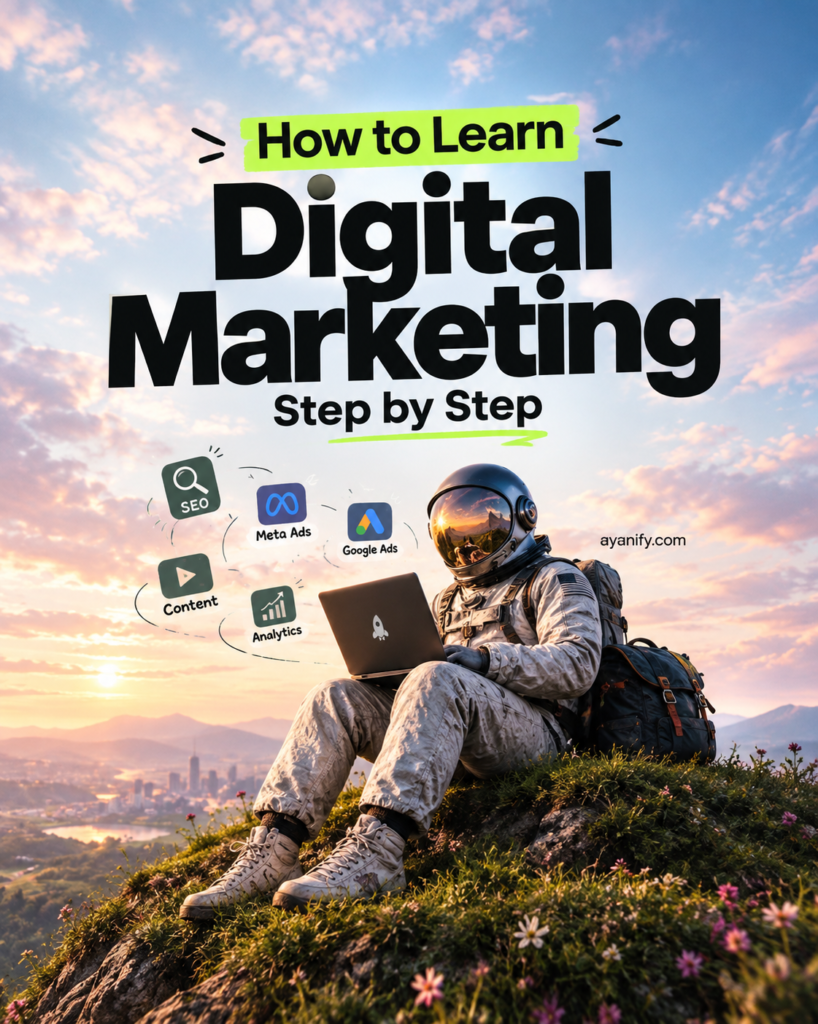
Learn digital marketing in the right order — from content and SEO to social media, paid advertising, analytics and specialization — with a practical roadmap designed for beginners.
Introduction
Digital marketing is one of the most in-demand skills today. However, beginners can easily feel overwhelmed by the number of topics involved — SEO, social media, advertising, email marketing, analytics and more.
The good news is that you don’t need to learn everything at once. A structured learning path can help you build a strong foundation and gradually develop deeper expertise in the areas that interest you.
Your Digital Marketing Learning Roadmap
Understand
Learn what digital marketing includes and how its different channels work together.
Practice
Apply SEO, content, social media and advertising concepts to real or sample projects.
Specialize
Build deeper expertise in an area that matches your interests and strengths.
Understand What Digital Marketing Actually Covers
Before diving into individual skills, first understand the overall digital marketing landscape. This gives you context for how each channel contributes to a broader marketing strategy.
- Search Engine Optimization (SEO)
- Social Media Marketing (SMM)
- Content Marketing
- Email Marketing
- Pay-Per-Click Advertising (PPC)
- Affiliate and Influencer Marketing
- Analytics and Performance Tracking
Learn the Fundamentals of Content Marketing
Content is an important part of many digital marketing strategies. Learning how to create useful content gives you a skill that can support SEO, social media and email marketing.
- Write clear and engaging content for different platforms.
- Understand audience intent and what people actually want.
- Learn basic storytelling and content structure.
- Understand how content supports SEO and social media.
Pick a topic you understand and write a short blog post around it. Focus on clarity, useful information and a logical structure rather than trying to make it perfect.
Learn SEO Basics
Once you understand content, move into SEO. SEO teaches you how search engines discover, understand and rank content.
- Understand crawling, indexing and search rankings.
- Learn keyword research and search intent.
- Practice on-page SEO such as titles, headings and meta descriptions.
- Understand internal linking and basic technical SEO.
- Learn about mobile-friendliness, site speed and sitemaps.
Take one sample blog post and optimize its title, headings, keywords, internal links and meta description.
Learn Social Media Marketing
Social media marketing teaches you how brands build visibility, communicate with audiences and create consistent online presence.
- Understand different social platforms and their audiences.
- Create a simple content calendar.
- Learn basic visual design using tools such as Canva.
- Understand reach, engagement, shares and other platform metrics.
- Study which types of content perform well for different audiences.
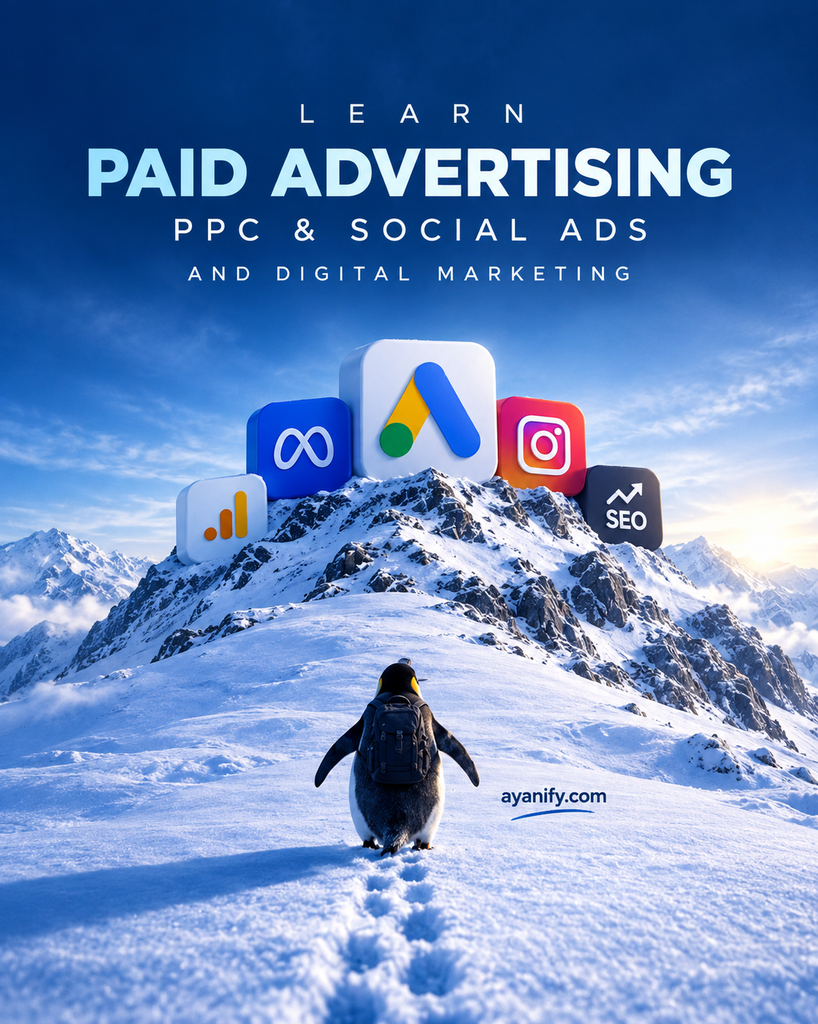
Learn Paid Advertising (PPC & Social Ads)
After becoming comfortable with organic marketing, start learning paid advertising. This introduces a more data-driven and performance-focused side of digital marketing.
- Learn Google Ads fundamentals.
- Understand search keywords and bidding concepts.
- Learn Meta Ads campaign structure and targeting.
- Understand budgets and ad placements.
- Learn important metrics such as CTR, CPC and conversion rate.
Learn Email Marketing
Email marketing gives businesses a direct way to communicate with their audience and nurture potential customers.
- Understand how email lists work.
- Learn to write clear and useful email copy.
- Understand open rates and click-through rates.
- Learn basic audience segmentation.
- Explore simple automated welcome sequences.
Create a sample three-email welcome sequence and think about what action you want the reader to take after each email.
Learn Analytics and Data Interpretation
Analytics helps marketers understand what is happening and make more informed decisions based on data.
- Google Analytics: Understand website traffic and user behavior.
- Google Search Console: Monitor search visibility and search performance.
- Platform Insights: Analyze social media and advertising performance.
Combine Your Skills Into a Real Project
Learning theory is useful, but practical experience is where the different pieces of digital marketing start coming together.
- Start a personal blog or portfolio website.
- Create a sample business or brand.
- Apply SEO and content strategies.
- Create and manage social media content.
- Experiment with a small paid campaign if appropriate.
- Track the results and improve your strategy.
Turn separate skills into one connected marketing system: Content → SEO → Social → Ads → Analytics → Optimization.
Choose an Area to Specialize In
Once you understand the fundamentals, you can go deeper into one or two areas based on your interests and the type of work you want to pursue.
SEO Specialist
Focus on search visibility, keyword research, content optimization, technical SEO and long-term organic growth.
Performance Marketer
Focus on paid advertising, campaign testing, conversion tracking, data analysis and optimization.
Content Strategist
Focus on content planning, writing, storytelling, audience needs and content distribution.
Social Media Manager
Focus on social content, community engagement, platform strategy, trends and audience growth.
Stay Updated Continuously
Digital marketing changes continuously. Platforms introduce new features, search systems evolve and new tools become available.
- Follow official Google resources and updates.
- Use educational resources from established marketing platforms.
- Take relevant certifications periodically.
- Follow real-world marketing case studies.
- Experiment with new strategies instead of relying only on old tactics.
A Simple Digital Marketing Learning Path
Foundation
Understand digital marketing, audiences, funnels and basic content.
Organic Marketing
Learn content, SEO and social media marketing.
Paid Marketing
Learn Google Ads, Meta Ads, targeting, budgets and campaign structure.
Analytics
Learn how to measure traffic, engagement, conversions and campaign performance.
Specialization
Choose an area and build deeper practical expertise.
Common Mistakes Beginners Make While Learning
Avoiding these common mistakes can make your learning process more focused and practical.
Trying to Learn Everything at Once
Jumping between too many topics can make learning confusing. Follow a structured order instead.
Only Consuming Content
Watching tutorials is not enough. Apply what you learn through real or sample projects.
Skipping Analytics
Numbers can feel intimidating initially, but understanding data is an important marketing skill.
Starting Paid Ads Too Early
Understand campaign fundamentals and tracking before spending significant money on advertising.
Giving Up Too Early
Some areas such as SEO and content marketing can take time to show meaningful results. Consistent practice matters.
Conclusion
Learning digital marketing step by step is much more effective than trying to master everything simultaneously. Start with the fundamentals, build skills in content and SEO, understand social media and paid advertising, and then develop your ability to interpret data.
Most importantly, practice what you learn. Build a website, start a sample brand, create content, test campaigns and analyze the results. With consistent hands-on practice, digital marketing becomes a connected system rather than a collection of unrelated skills.
Frequently Asked Questions
Q1: How long does it take to learn digital marketing basics?
The timeline depends on your learning schedule and how much practical work you do. With consistent study and practice, beginners can build a solid foundation over several months.
Q2: Do I need to learn every area of digital marketing?
You don’t need to specialize deeply in every area. A working understanding of the major channels is useful, after which you can develop deeper expertise in one or two areas.
Q3: Should I start with free resources or paid courses?
Free educational resources can provide a strong starting point. Paid courses can become useful later when you want structured learning, mentorship or deeper specialization.
Q4: Is digital marketing hard to learn for beginners?
You don’t need an advanced technical background to start. Many foundational digital marketing skills can be learned without coding. The main challenge is building practical experience across different channels.
Q5: What’s the best way to practice while learning?
Create a personal blog, portfolio website, sample business or social media account and apply each concept directly. Practical projects help turn theoretical knowledge into usable skills.
Start Your Digital Marketing Journey
Learn the fundamentals, practice consistently, build real projects, and gradually specialize in the area you enjoy most.
Want results like this for your business?
Tell us your goal and we will suggest the right SEO, ads or website plan.
Get a free consultation